

By Augustine Ehikioya
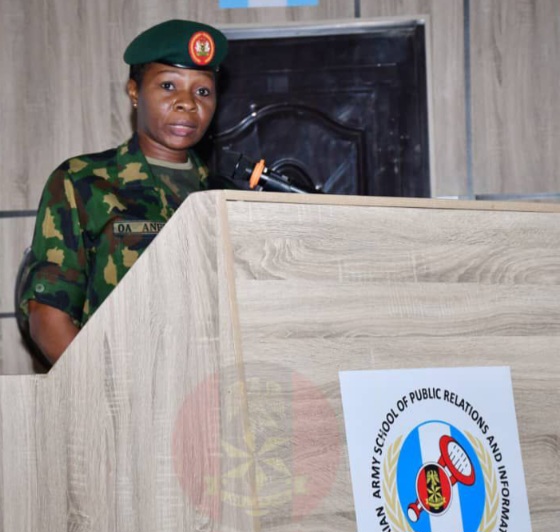
The Acting Director Army Public Relations, Colonel Apollonia Anele, has commended the Nigerian Army School of Public Relations and Information (NASPRI) for what she described as significant institutional progress and sustained professional development since its inception in 2010.

This commendation was contained in the inaugural speech of the Second Quarter Courses for 2026, held at the Lt Gen Taoreed Lagbaja Auditorium, located in Mohammadu Buhari Cantonment, Giri Abuja.

The event, according to a statement by Captain Christian Onyemachi, Training Officer NASPRI, and made available to Security Watch Africa (SWA), marked another milestone in the school’s ongoing mandate to enhance the communication and information management capabilities of Nigerian Armed Forces personnel.
In her speech, Colonel Anele, who was the Special Guest of Honour, emphasised the strategic importance of the newly inaugurated courses, noting that they are specifically designed to address emerging challenges in contemporary security environments.
She highlighted that the programmes integrate modern approaches to digital warfare and crisis communication, thereby equipping students with the requisite skills to operate effectively in an increasingly complex information landscape.
According to her, the evolving nature of conflict particularly the prominence of digital and social media platforms has transformed the way military operations are perceived and communicated to the public domain.
Speaking further, she observed that the democratisation of information through social media has created a situation where public discourse is no longer controlled by traditional gatekeepers.
She therefore urged students especially students of Advanced Public Relations Course to approach their training with diligence and professionalism, stressing that their role in shaping public perception is critical to the broader efforts of the Nigerian Armed Forces in combating terrorism and addressing national insecurity.
She underscored the need for accurate, timely, and strategic communication as a force multiplier in modern military operations.
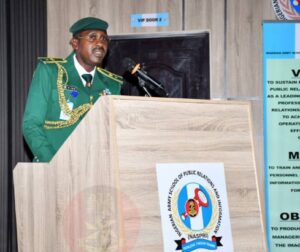
In his welcome address, the Acting Commandant of NASPRI, Lt Col Shuaib Umar reinforced these sentiments by calling on students to demonstrate commitment and discipline throughout the duration of their training.
He emphasised that the institution maintains strict standards of conduct and would not tolerate any form of indiscipline. He applauded the Acting Director for her support and strategic guidance which assisted the school in carrying out its mandate.
The Commandant further acknowledged the contributions of the staff, commending their dedication to delivering high-quality training that prepares students for future operational and professional responsibilities.
Earlier in the programme, the Acting Chief Instructor, Major Nureni Alimi, provided an overview of the course structure and expectations.
He explained that the curriculum is designed to balance theoretical instruction with practical application, ensuring that participants gain both conceptual understanding and hands on experience.
Major Alimi also expressed confidence in the leadership of the Acting Commandant, particularly in his commitment to continuously updating the curriculum with relevant subjects aimed at improving student performance and operational readiness.
Students were additionally reminded of the importance of adhering to established Standard Operating Procedures (SOPs) and upholding the core values of the Nigerian Army throughout their training.
These principles, the statement said, are fundamental to maintaining professionalism and operational effectiveness.
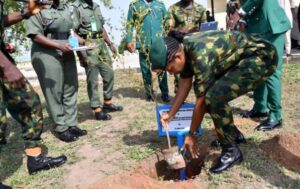
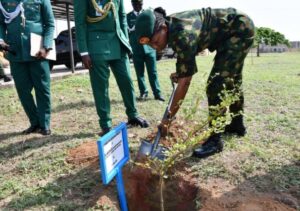
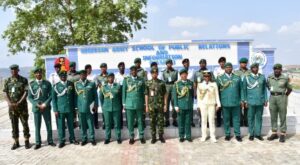

The ceremony was concluded with series of formal activities, including the official inauguration of the courses, presentation of souvenirs to the Special Guest of Honour and a Symbolic Tree Planting Exercise to mark a historic foot print of the the Acting Director in the institution.
Collectively, it added that the activities underscored the significance of the occasion and reaffirmed the institution’s role in advancing communication and information management in line with the DAPR mission statement.