

At the busiest seaports and land borders in Nigeria, the face of enforcement is changing. It is no longer just about uniformed officers, checkpoints, and cargo examinations. BAKO CHRISTOPHER WRITES
Today, a Nigeria Customs Service officer is as likely to be interpreting AI-generated risk profiles as he is to be conducting a physical inspection. Another is likely to have just returned from a leadership course in Gwagwalada, or a technical workshop with the World Bank, or a global forum at the World Customs Organisation in Brussels.
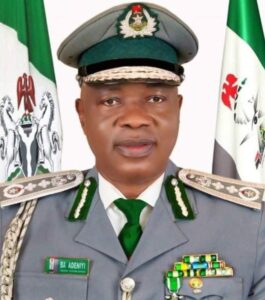
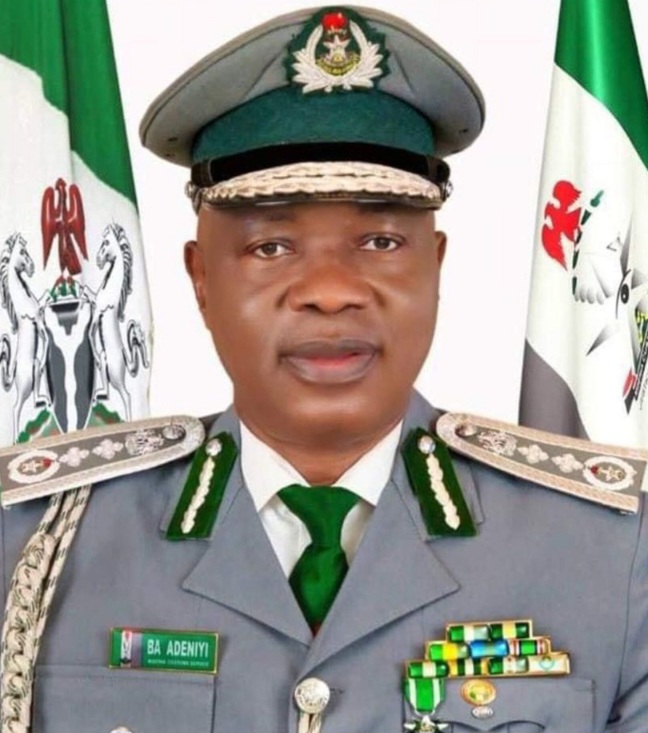
This is the new Nigeria Customs Service under Comptroller-General Bashir Adewale Adeniyi, MFR. His thesis is simple: if you want to secure borders, facilitate trade, and grow revenue in 2026, you must first invest in the people holding the job.
Across training academies, command offices, and international platforms, the NCS is executing a quiet but deliberate transformation. Training is no longer a routine HR exercise. Artificial Intelligence is no longer a buzzword. Global partnerships are no longer about donor funding alone.
Together, they are becoming the three pillars of a modern Customs administration — one built to tackle smuggling, secure borders, and position Nigeria as a leader in Africa’s trade future.
This is the story of how that transformation is happening.
THE GLOBAL STAGE: NIGERIA SPEAKS ON CAPACITY
The shift found its clearest expression in February 2026 at the 17th Session of the WCO Capacity Building Committee in Brussels.
Rather than present a list of trainings conducted, the NCS went to demonstrate impact. Representing the Service, National Public Relations Officer Deputy Comptroller Abdullahi Aliyu Maiwada delivered a paper titled “Communicating the Results of Capacity-Building Initiatives More Effectively: Nigeria Customs Service Experience and Lessons Learned.”
His core argument: technology and policy only work when people understand them, trust them, and can implement them.
Maiwada explained how the Service moved from “activity reporting” to “impact reporting.” Using the Time Release Study, the NCS used data to show that port delays were not primarily caused by Customs inspections, but by systemic idle time across the trade chain. That evidence shifted the public narrative and forced shared accountability.
He also highlighted the Advance Ruling Programme and the Authorised Economic Operator, AEO, Programme. About 120 companies are now AEO-certified, and over 3,270 officers have been trained as AEO Champions nationwide. The result: faster clearance for compliant traders and better risk management for Customs.
“The Service’s reform communication framework is structured around three core pillars: institutional capacity building, human resource development and stakeholder capacity engagement,” Maiwada told delegates.
The presentation carried extra weight because CGC Adeniyi currently serves as Chairperson of the WCO Council. Nigeria is no longer just learning from global Customs. It is helping to shape how other countries communicate and implement reform.
GEARING UP FOR THE AI AGE
If Brussels was about global credibility, Abuja was about future readiness.
Recognizing that Artificial Intelligence is now an operational necessity, the NCS launched a specialized training on AI-driven revenue generation, remittances and reconciliation. Senior officers, tech experts, and members of the National Assembly’s Public Accounts Committees attended.
Opening the programme, CGC Adeniyi set the tone:
“We are united in our resolve to ensure transparency in public accounting. Technology continues to evolve and plays an important role in strengthening our operations. It has also helped us better understand patterns in international trade.”
He urged participants to maximize the training: “We want to reap the benefits of Artificial Intelligence collectively. I encourage participants to actively engage the facilitators, ask questions and take full advantage of the training.”
DCG Kikelomo Adeola was even more direct: “Artificial Intelligence is no longer a concept of the future; it is a technology we must embrace to strengthen our systems.”
The inclusion of lawmakers was strategic. Revenue leakages and remittance gaps are not just Customs problems. By training oversight committees alongside officers, the NCS is building a shared language around transparency and accountability.
The goal isn’t to replace humans. It’s to equip them with tools to detect anomalies, predict trade fraud, and block revenue losses in real time — critical for both economic security and national security.
While AI and leadership make headlines, the bulk of capacity building is happening in operational commands.
The NCS has expanded specialized training across virtually every Customs function:
– Advanced Image Analysis for Chief Examiners and Releasing Officers to improve non-intrusive inspection and reduce cargo delays.
– Post Clearance Audit workshops with the World Bank Group under the Accelerated Revenue Mobilisation Reform Programme, focused on recovering duties and improving compliance.
– Environmental trade regulation training with international partners to combat wildlife trafficking and hazardous waste movement.
– Fiscal reforms training with the Nigeria Revenue Service to align Customs with Nigeria’s new tax architecture.
Joint operations and intelligence sharing with France, UNODC, and other partners on transnational drug trafficking.
What ties these together is continuity. The Service is moving away from one-off workshops to what officials call a “continuous learning ecosystem.”
Partnerships with the WCO, World Bank, International Trade Centre, GIZ and others ensure Nigerian officers are plugged into global best practices. In return, Nigeria is contributing its own experience managing high-volume, complex border environments — a model other African countries are watching closely.
GROWING LEADERS AT GWAGWALADA
Technology can be procured overnight. Leadership culture takes years. That’s why the Nigeria Customs Command and Staff College, Gwagwalada is central to the reform.
In early 2026, the College commenced Senior Course 12 and Junior Course 21, designed to prepare middle and senior officers for a digital, intelligence-led Customs environment.
Then Commandant ACG Oluyomi Adebakin said the College’s role is clear: “The prestigious Nigeria Customs Command and Staff College has consistently produced effective middle-level management officers and beyond, who drive the Service’s agenda across various commands and units.”
Commander of Training and Doctrine Command, DCG Suleiman Chiroma, called the courses the cornerstone of the modernization agenda: “This capacity-building initiative is the cornerstone of the Nigeria Customs Service’s strategic objectives, aimed at repositioning the Service to effectively respond to emerging trends.”
The payoff came with the graduation of 50 officers from Senior Course 14/2026. Notably, officers from the National Public Relations Unit emerged as Overall Best and Second Best Graduating Students — proof that communication, public trust, and stakeholder engagement are now core leadership skills.
At the ceremony, DCG Chiroma, representing the CGC, charged them: “To whom much is given, much is expected. I urge you to remain mission-focused and continue to serve the nation with honesty, integrity and dedication.”
For Security Watch Africa readers, the link is direct. A better-trained Customs Service is a stronger national security institution.
1. Smarter enforcement: Officers trained in risk management and AI can target real threats — arms, drugs, illicit goods — instead of random searches.
2. Less corruption: Digital processes reduce human contact points and opportunities for compromise.
3. Faster trade: Efficient borders mean fewer bottlenecks that smugglers exploit and more revenue for security funding.
4. Better partnerships: When traders understand Customs processes, they become allies in intelligence gathering rather than adversaries.
As Nigeria implements AfCFTA and expands regional trade, secure and efficient borders will determine whether the country gains economically or loses to illicit flows. The NCS is positioning itself to ensure it’s the former.
THE ADENIYI DOCTRINE
Four principles define the current NCS approach: People First: Invest in officers before buying more machines; Impact Over Activity: Measure success by clearance times reduced, revenue recovered, and trust gained; Communicate Reform: Take the public, legislature, and international community along; and Partner Globally: No country modernizes Customs alone. Knowledge exchange accelerates progress.
Under CGC Adeniyi, capacity building has become an “enduring strategic investment” — not a once-a-year workshop.
THE OFFICER IS THE SYSTEM
From Brussels to Gwagwalada, from AI labs in Abuja to examination bays in Lagos and Tin Can, one philosophy is emerging: the officer is the system.
Scanners, risk engines, and AI dashboards are tools. But without a professional, informed, and adaptable workforce, they are just expensive equipment.
The Nigeria Customs Service is betting that its most important investment in the next decade will not be hardware, but human capacity.
In a world where borders are both economic gateways and security frontlines, that bet may determine whether Nigeria secures its trade, protects its revenue, and leads Africa’s Customs modernization.
As CGC Adeniyi told trainees: “We want to reap the benefits of Artificial Intelligence collectively.”