

By Elizabeth Tanko
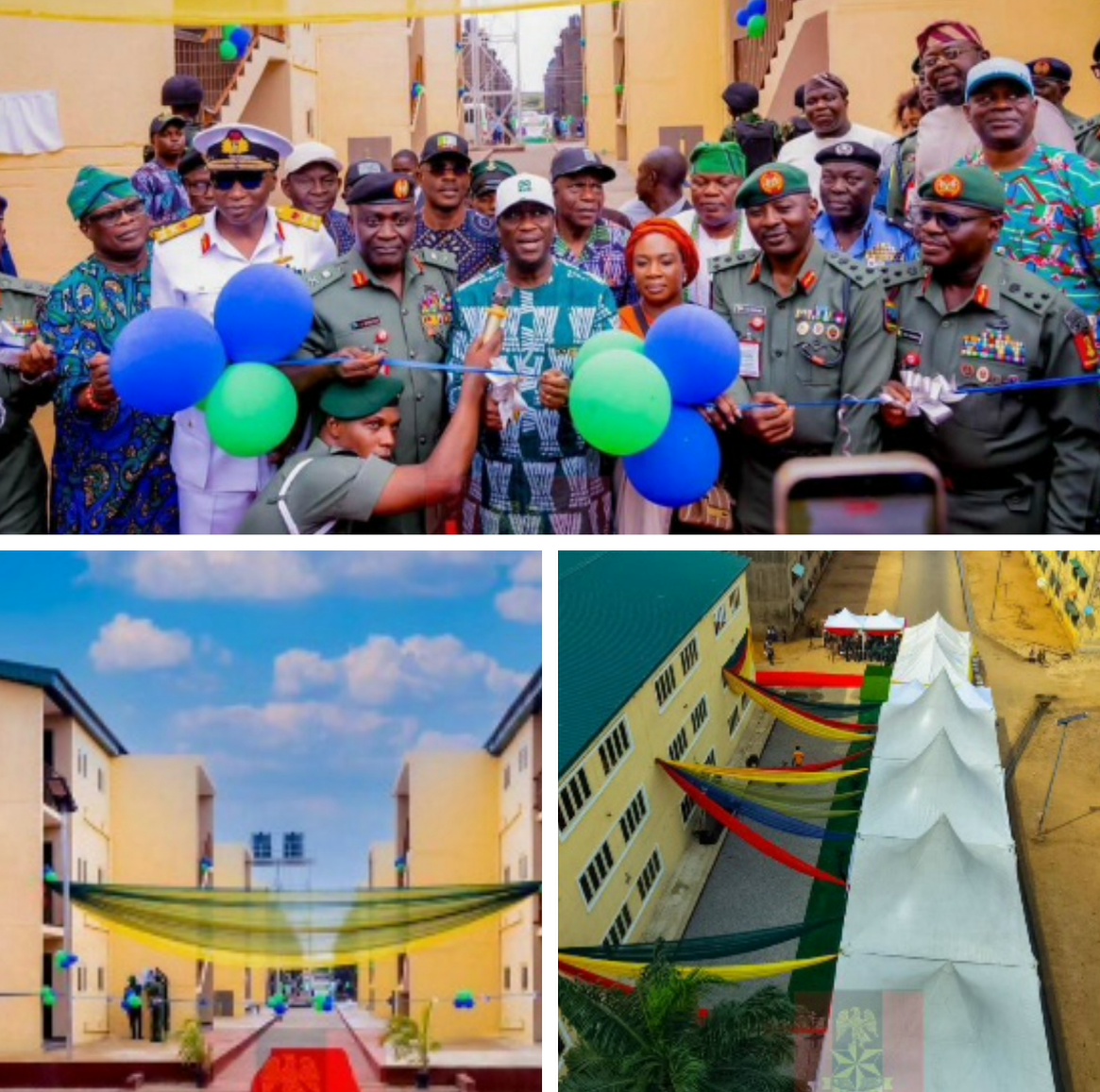
Ikeja, Nigeria – The Nigerian Army’s 9 Brigade at TA Lagbaja Cantonment Ikeja has been handed over 72 renovated residential flats by the Lagos State Government to improve Troops welfare and reinforce its commitment to strengthening civil-military relations and supporting national security.
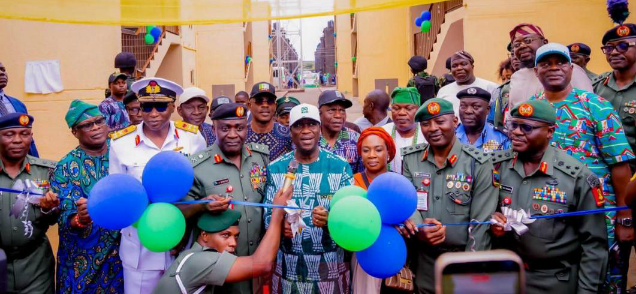


The facility comprises two remodelled blocks of Corporal and Below Quarters, providing improved accommodation for soldiers and their families as part of efforts to enhance personnel welfare, boost troop morale and strengthen operational effectiveness, Assistant Director Army Public Relations, Headquarters 9 Brigade Nigerian Army, Major Akinola Ajibola disclosed this in a statement on Sunday.
The Deputy Governor of Lagos State, Dr Kadri Obafemi Hamzat, who commissioned the facility on behalf of Governor Babajide Sanwo-Olu, said the intervention was designed to complement the Federal Government’s ongoing efforts to expand and reposition the Nigerian Army.
Dr Hamzat noted that providing decent accommodation and essential welfare infrastructure was critical to supporting the Army’s growing manpower and operational responsibilities.
He also reaffirmed the state government’s recognition of the sacrifices and contributions of military personnel and their families towards maintaining peace, security and stability across Lagos State.

In his welcome address, the Commander 9 Brigade Nigerian Army, Brigadier General AO Owolabi, commended the Lagos State Government for its sustained partnership and commitment to improving the welfare of military personnel.
He described the project as a practical demonstration of the state government’s support for the Nigerian Army, noting that it aligns with the Chief of Army Staff’s Soldier First Culture, championed by Lieutenant General Waidi Shaibu, which places the welfare, well-being and operational effectiveness of troops at the centre of military administration.
According to him, decent accommodation for soldiers and their families remains a critical component of military welfare, with significant implications for morale, productivity and operational readiness.
Brig Gen Owolabi added that the intervention would further strengthen the longstanding relationship between the Nigerian Army and the Lagos State Government while highlighting the importance of civil-military cooperation in addressing shared security and welfare concerns.
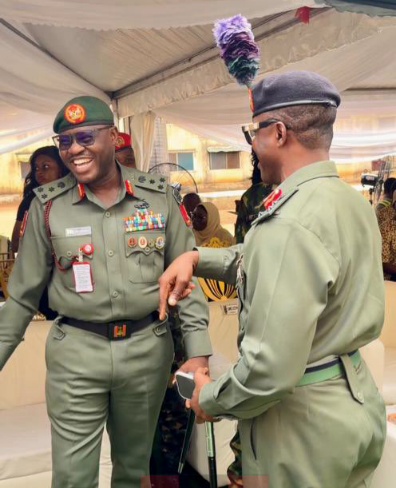
The Deputy Governor also acknowledged the contributions of Brigadier General Matthew Oyekola, commending his commitment to the welfare and comfort of military personnel through the facilitation of the renovation project.
Hamzat further assured that the Lagos State Government would continue to explore ways of improving accommodation and living conditions for soldiers within the cantonment.
He described the successful completion and handover of the facility as another testament to the state’s sustained engagement with the Nigerian Army.
The commissioning ceremony attracted an array of senior government officials, military commanders, heads of security agencies and other prominent personalities.
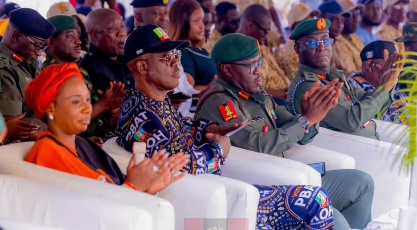
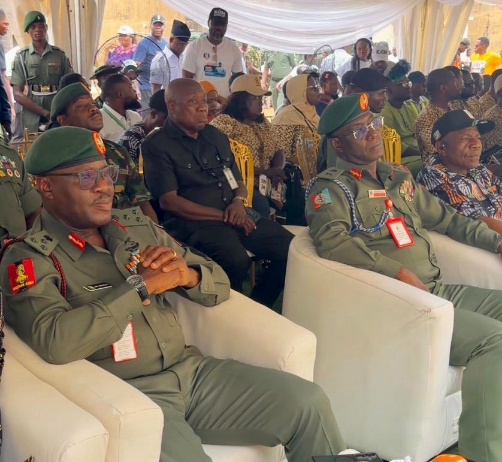
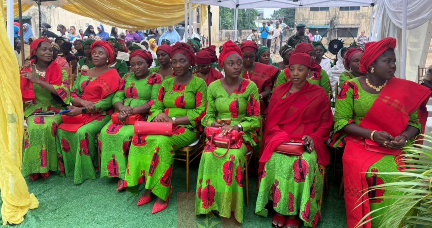
Among those in attendance were the General Officer Commanding 81 Division Nigerian Army; Flag Officer Commanding, Western Naval Command; Corps Commander Ordnance; Deputy Commandant, Armed Forces Resettlement Centre; Commandant, Nigerian Army College of Logistics and Management; Acting Military Secretary (Army); Secretary to the Lagos State Government; and Commandant, Nigerian Army School of Finance and Administration.
Others included the Group Managing Director of Nigerian Army Welfare Limited by Guarantee, Commissioner of Police, Lagos State, Chairman of Air Peace, Senator Musiliu Obanikoro and the Oba of Onigbongbo.
Members of the Nigerian Army Officers’ Wives Association and Nigerian Air Force Officers’ Wives Association were also present.
The handover of the 72 residential flats represents another significant intervention in improving the living conditions of military personnel and their families.
Beyond the provision of physical infrastructure, the initiative underscores the strategic importance of partnerships between subnational governments and the Armed Forces in strengthening national security.
It also reinforces the growing recognition that military effectiveness goes beyond equipment and operational deployments to include the welfare, comfort and overall well-being of personnel who serve on the frontlines of national security.