

By Elizabeth Tanko
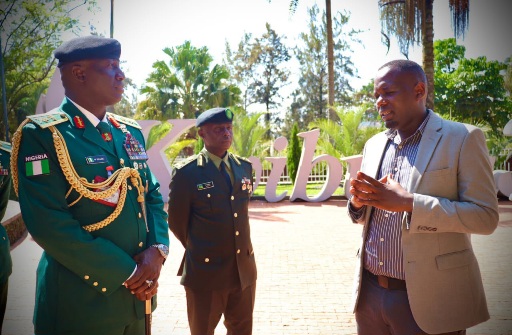
Kigali, Rwanda – The Chief of Army Staff (COAS), Lieutenant General Waidi Shaibu, on Monday, 19 October 2026, visited Rwanda’s Campaign Against Genocide Museum (CAGM) in Kigali, underscoring the importance of civilian protection, decisive military action and collective responsibility in combating genocide and other forms of criminality.
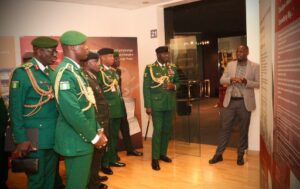
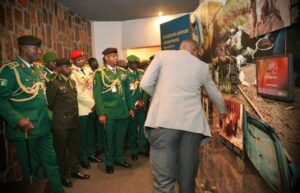
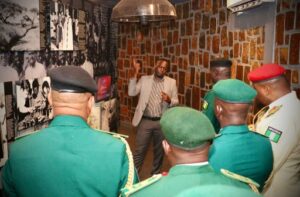
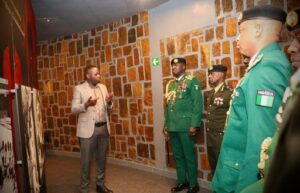
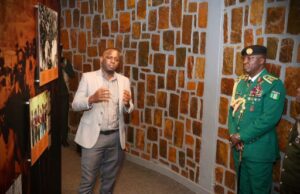
The museum chronicles the role of the Rwandan Patriotic Army in ending the 1994 Genocide against the Tutsi, offering valuable lessons on safeguarding innocent lives, upholding human rights and fostering national unity.
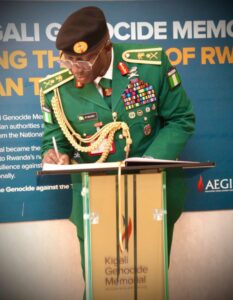
The experience reinforces the imperative for Nigerians to rise above ethnic, religious and political differences and unite with security agencies against threats to national peace and stability.
The visit further underscores the Nigerian Army’s commitment to civilian protection and solidarity with the people of Rwanda and the Rwanda Defence Force (RDF).
In a related development, Gen. Shaibu has initiated plans for military cadet exchanges, expanded counter-terrorism training and defence industrial collaboration between Nigeria and Rwanda to strengthen bilateral military cooperation and enhance regional security.
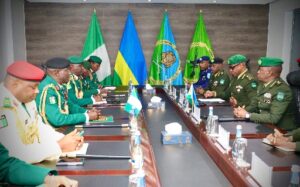
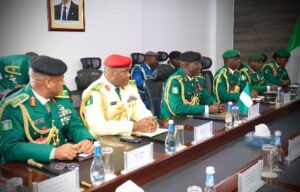
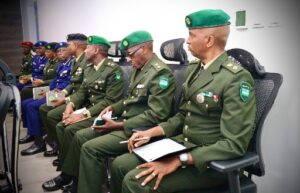
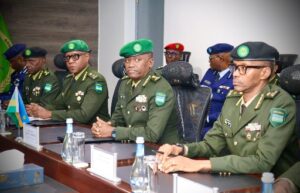
The initiatives, proposed during his official working visit to Rwanda, include arrangements for two Nigerian Defence Academy (NDA) cadets to undergo a four-year training programme at the Rwanda Military Academy, reciprocal training opportunities for Rwandan cadets and collaboration between the Defence Industries Corporation of Nigeria (DICON) and relevant Rwandan institutions to boost indigenous defence production.
Acting Director, Army Public Relations, Col. Appolonia Anele, in a statent on Monday, said during discussions with the Army Chief of Staff of the RDF, Major General Vincent Nyakarundi, Gen. Shaibu proposed expanded personnel exchanges and pre-deployment training for peace support operations through the Martin Luther Agwai International Leadership and Peacekeeping Centre (MLAILPKC).
He identified logistics, Military Police training and exchange of operational experiences in counter-terrorism and counter-insurgency as additional areas of cooperation, emphasising the need to leverage the expertise of both armies to tackle emerging security threats.
On defence production, Gen. Shaibu proposed closer collaboration between DICON and Rwanda’s defence engineering and procurement institutions to promote local military equipment production, technology development and self-reliance.
He also paid tribute to the courage and sacrifices of the Rwandan Patriotic Army, particularly the 600 personnel who defended Kigali during the 1994 Genocide against the Tutsi, describing their resilience and patriotism as enduring lessons in national resolve and military leadership.
Responding, Maj Gen Nyakarundi commended the Nigerian Army for providing specialised Military Police and Intelligence training to Rwandan personnel and called for expanded professional military education through the Armed Forces Command and Staff College, Army War College Nigeria and National Defence College.
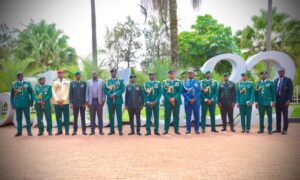
The Rwandan Army Chief welcomed the proposed cadet exchanges and defence industrial collaboration, describing the visit as a demonstration of growing mutual trust and professional solidarity between both armies.