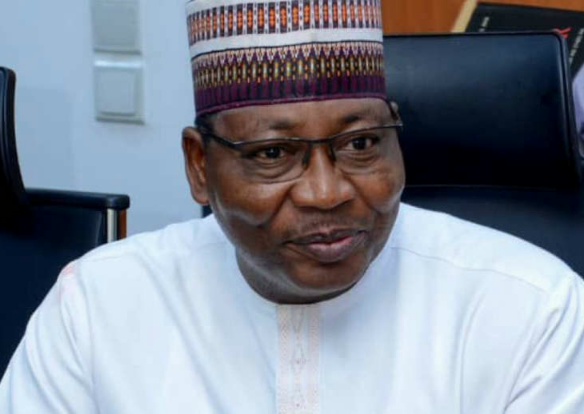


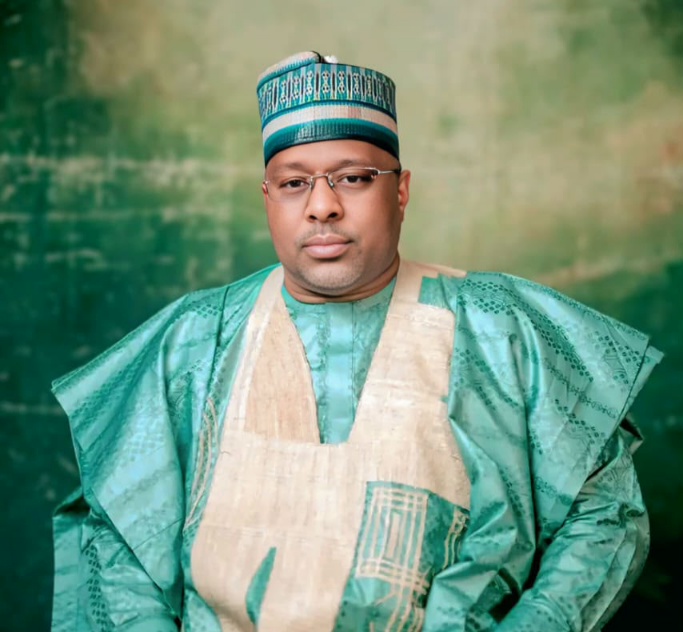
By Amb. Dr. Mukhtar Gashash
A Comprehensive Policy Report on Broken Homes, Irresponsible Fatherhood, Marriage Protection, Child Welfare and the Future of Kano State.
A Call for a Ministry of Marriage and Family Development.
1. INTRODUCTION: THE CRISIS WE MUST NO LONGER IGNORE.
There is a question we must honestly ask ourselves as a society:
What happens to a society when the family, which is supposed to be its strongest foundation, begins to fall apart?
I have spent considerable time reflecting on some of the social challenges confronting Kano State, particularly insecurity, drug abuse, youth violence, street begging, juvenile delinquency, broken homes and the increasing number of children growing up without the care, guidance and support of both parents.
I have come to believe that family instability is an important social issue that deserves far greater attention in our development agenda.
We cannot continue to discuss insecurity without examining the conditions in which our children are raised. We cannot talk about drug abuse without considering parental guidance, emotional support, peer influence and the environment in which young people grow up. We cannot discuss the future of our children while ignoring the circumstances of mothers who are left alone to shoulder the responsibilities of raising them.
This is not an accusation against all men, nor is it an attempt to blame women for the breakdown of marriages. It is a call for collective responsibility.
A society cannot build a prosperous future while neglecting the institution of the family.
2. BROKEN HOMES AND THEIR CONSEQUENCES FOR SOCIETY
A home is supposed to be a child’s first school. It is where a child learns discipline, respect, responsibility, love, patience, compassion and the difference between right and wrong.
When a home becomes unstable, children may experience emotional distress, financial hardship, neglect, inadequate supervision and a lack of positive parental guidance.
Some children find themselves searching for acceptance and belonging outside their homes. Others become vulnerable to negative peer pressure, exploitation, substance abuse and criminal influences.
This does not mean every child from a separated family becomes a criminal, or that every stable home produces a responsible child. Many single mothers raise outstanding children, and many children from two-parent households also experience serious difficulties.
However, the absence of responsible parenting can create vulnerabilities that society must address.
In Kano, research on drug abuse has identified peer influence, family circumstances, parenting practices and other social and economic pressures among factors associated with substance abuse.
Therefore, family strengthening must become part of our wider strategy for education, youth development, drug prevention and community security.
If we want to secure our streets, we must also strengthen our homes.
3. THE ABANDONMENT OF FATHERLY RESPONSIBILITIES
One of the most painful issues confronting many families is the abandonment of parental responsibilities following divorce or separation.
There are situations where a man divorces his wife and moves on with his life, while the woman is left with the children and the enormous responsibility of raising them.
She must provide food, school fees, accommodation, healthcare, clothing, emotional support and moral guidance.
Sometimes, the father disappears completely. Sometimes, he provides only when he feels like doing so. In other cases, mothers must repeatedly approach family institutions and courts to seek financial support that should never have required endless pleading.
We must ask ourselves:
* Who provides for the children when their father abandons them?
* Who pays their school fees?
* Who takes responsibility when they become sick?
* Who supports their emotional and psychological development?
* Who protects the mother who has been left with responsibilities she cannot reasonably carry alone?
* What happens when the father refuses to obey a court order?
A man does not stop being a father because he is no longer married to the mother of his children.
Divorce may end a marriage, but it must never end fatherhood.
Marriage breakdown should not become an excuse for abandoning children.
Fatherhood is a lifelong responsibility, not a temporary privilege.
4. THE PLIGHT OF WOMEN LEFT TO CARRY THE BURDEN
We must recognise the difficulties faced by women who find themselves raising children without meaningful support from their former husbands.
Some women enter marriage with hopes of building a home, raising children and growing old with their husbands. When the marriage collapses, they are sometimes left to rebuild their lives from nothing.
Many must become both the breadwinner and the primary caregiver.
Some abandon their education or careers. Others struggle to pay rent, feed their children and keep them in school.
Some suffer humiliation and social discrimination simply because they are divorced.
We must not allow divorce to become a sentence of poverty, humiliation and lifelong hardship for women.
A woman should not lose her dignity because her marriage has ended.
Equally, children should not lose their right to care and financial support because their parents have separated.
Our society must protect women against abandonment, exploitation, domestic violence and economic hardship while ensuring that children receive the care and support to which they are entitled.
5. MARRIAGE IS A RESPONSIBILITY, NOT JUST A CEREMONY
In our society, considerable attention is given to wedding ceremonies, celebrations, dowries, decorations, clothes and the public announcement of marriages.
But how much attention do we give to preparing people for the actual responsibilities of marriage?
How many prospective husbands understand the financial responsibilities of maintaining a family?
How many prospective wives receive adequate guidance on their rights and responsibilities?
How many couples receive counselling on communication, conflict resolution, parenting and family finances before marriage?
How many young men understand that being a husband involves much more than providing a wedding ring, organising a ceremony or having children?
Marriage requires emotional maturity, patience, financial responsibility, understanding, sacrifice and mutual respect.
We must begin to change our approach.
Marriage preparation should be treated as an important social responsibility.
We should encourage prospective couples to receive appropriate premarital education and counselling, supported by qualified professionals, religious scholars, traditional institutions and experienced family counsellors.
The objective must not be to prevent poor people from marrying. Financial circumstances alone should never be used to deny people their right to marry.
Rather, the objective should be to prepare couples for the responsibilities they are undertaking and help them understand how to build sustainable families.
6. THE NEED FOR A MINISTRY OF MARRIAGE AND FAMILY DEVELOPMENT
I strongly believe that Kano State should seriously consider establishing a dedicated Ministry of Marriage and Family Development.
For too long, family stability, responsible fatherhood, marriage preparation, parental accountability and post-divorce family responsibilities have not received the level of institutional attention they deserve.
We already have a Ministry of Women Affairs, Children and Disabled Persons. Its work remains important and must not be undermined.
However, I believe there is a case for a dedicated institution with a specific mandate to strengthen the family as a whole.
The proposed Ministry of Marriage and Family Development would focus on:
1. Marriage preparation and premarital education.
2. Family counselling and mediation.
3. Responsible fatherhood and responsible motherhood.
4. Prevention of avoidable family breakdown.
5. Protection of children affected by divorce and separation.
6. Enforcement coordination for parental maintenance responsibilities.
7. Support for abandoned women and children.
8. Family welfare research and data collection.
9. Public education on family values and parenting.
10. Collaboration with religious and traditional institutions.
This ministry would not exist to force couples to remain in abusive marriages or to prevent legitimate divorce.
Its purpose would be to promote healthy marriages, protect vulnerable family members and ensure that parental responsibilities are respected before, during and after separation.
7. OUR PROPOSED FAMILY PROTECTION AND RESPONSIBILITY PROGRAMME
I propose that Kano State introduce a comprehensive programme built around the following initiatives.
A. Responsible Marriage Preparation Programme
Before marriage, prospective couples should have access to structured education covering:
* Rights and responsibilities of husbands and wives.
* Financial planning and household management.
* Communication and conflict resolution.
* Parenting and child development.
* Health and family wellbeing.
* Religious and ethical responsibilities.
* Understanding the consequences of divorce.
The programme should be accessible, affordable and culturally sensitive.
B. Responsible Fatherhood Initiative
We must restore the importance of fatherhood.
A father should understand that his responsibilities include financial maintenance, emotional support, education, discipline, protection and the overall welfare of his children.
The government should work with religious leaders, traditional rulers, schools and community organisations to promote responsible fatherhood.
C. Child Maintenance Enforcement Programme
A system should be established to improve the enforcement of lawful child maintenance obligations.
Where a court has ordered a parent to provide financial support, there should be an effective process for monitoring compliance and addressing deliberate non-compliance.
The government should strengthen cooperation between the relevant courts, social welfare authorities and legal aid institutions.
Where legally appropriate, payment arrangements could include regular salary deductions, structured payment schedules and other lawful enforcement mechanisms.
D. Family Mediation and Counselling Centres
Every local government area should have access to family counselling and mediation services.
These centres should provide confidential assistance to couples experiencing difficulties.
Where reconciliation is safe and mutually desired, trained counsellors should help couples explore solutions.
Where reconciliation is not appropriate, the centres should help parents agree on child welfare, maintenance, custody and other responsibilities.
Cases involving violence, coercion or serious abuse must be referred for appropriate protection and legal intervention rather than forced mediation.
E. Protection and Support for Divorced Women
Women left with dependent children should have access to:
* Legal assistance.
* Economic empowerment.
* Skills acquisition.
* Educational support for their children.
* Social welfare assistance where necessary.
* Counselling and psychosocial support.
* Safe accommodation in cases of abuse or serious vulnerability.
A divorced woman must never be treated as a burden on society.
She deserves dignity, protection and equal opportunity to rebuild her life.
F. Child Protection and Rehabilitation
Children affected by family breakdown should be identified through appropriate social welfare mechanisms and supported before their difficulties become more serious.
Interventions should include school retention, mentorship, psychological support, drug prevention, vocational training and family reunification where safe and appropriate.
8. THE ROLE OF RELIGIOUS AND TRADITIONAL INSTITUTIONS
Kano is a society where religious and traditional institutions have considerable influence.
We must use this influence positively.
Our Islamic scholars, Imams, traditional rulers, community leaders and family elders should become active partners in strengthening marriage and family responsibilities.
Friday sermons and community awareness programmes should regularly address:
* The Islamic responsibilities of husbands and wives.
* The rights of women in marriage.
* The rights of children.
* The obligation of fathers to maintain their children.
* The consequences of neglecting family responsibilities.
* The importance of kindness, justice and mutual respect.
* The proper conduct of divorce and post-divorce obligations.
We must remind our people that religion teaches responsibility, justice, compassion and accountability.
A man cannot claim the privileges of marriage while deliberately neglecting the responsibilities that come with it.
9. OUR COURTS AND THE ENFORCEMENT OF FAMILY RESPONSIBILITIES
I am particularly concerned about the burden placed on family and Sharia courts by disputes involving divorce, child custody, maintenance and parental responsibilities.
These institutions perform an important role in resolving family disputes.
However, we must examine whether existing enforcement arrangements are sufficiently effective in ensuring that parents comply with their obligations.
We need better coordination among:
* Sharia courts and relevant family courts.
* The Ministry of Justice.
* Social welfare institutions.
* Legal aid services.
* Religious and traditional leaders.
* Child protection agencies.
A father who has been ordered by a competent court to maintain his children should not be able to ignore that responsibility without consequences under the law.
At the same time, every person must have access to fair hearings, due process and appropriate legal representation.
We must ensure that justice does not end with the delivery of a court judgment. It must also be reflected in the lives of the children and families concerned.
10. A NEW STANDARD OF RESPONSIBLE PARENTING
We must begin to teach our boys that becoming a man is not simply about getting married or having children.
It is about responsibility.
It is about protecting, providing, guiding, nurturing and leading with compassion.
We must also teach our girls that marriage should never require them to surrender their dignity, safety, education or fundamental rights.
Both boys and girls must grow up understanding that marriage is a partnership built on responsibility and mutual respect.
We should introduce family life education, mentorship and parenting awareness into appropriate school and community programmes.
Our young people must be prepared not just for employment and economic success, but also for responsible adulthood and family life.
11. A FAMILY AND SOCIAL STABILITY RESEARCH PROGRAMME
We must not base public policy solely on personal observations, even when those observations reflect genuine community concerns.
I propose a statewide assessment across all 44 local government areas of Kano State to establish:
* The number of divorce and separation cases.
* The number of children affected by parental separation.
* The proportion of children receiving regular maintenance.
* The number of outstanding maintenance orders.
* The major causes of marital breakdown.
* The prevalence of domestic violence and family neglect.
* The relationship between family instability, school dropout and youth vulnerability.
* The effectiveness of existing family support institutions.
The findings should guide policy, budgeting and legislation.
Our decisions must be supported by reliable evidence, not assumptions.
12. LEGISLATIVE AND INSTITUTIONAL REFORMS
Kano State already enacted a Child Protection Law in 2023. The priority should therefore include effective implementation, adequate funding, public awareness and enforcement.
We should also review existing family-related laws and administrative arrangements to identify gaps in the protection of women and children.
In particular, consideration should be given to:
1. Stronger mechanisms for enforcing child maintenance orders.
2. Accessible registration and documentation of marriages and divorces.
3. Clear procedures for resolving custody and maintenance disputes.
4. Legal protection against domestic abuse and family abandonment.
5. Better access to legal aid for vulnerable women and children.
6. Stronger social welfare services at local government level.
7. Effective coordination between Sharia institutions and other relevant legal authorities.
Any new legislation must respect constitutional protections, religious and legal frameworks, due process and the best interests of the child.
The objective should be to close gaps in implementation and enforcement, not simply to create more laws that remain on paper.
13. THE MESSAGE TO EVERY MAN AND WOMAN IN KANO
To our men:
Please understand that fatherhood is a responsibility before it is a privilege.
Do not bring children into this world only to abandon them when a marriage becomes difficult.
Do not leave a woman with the entire burden of raising children you both brought into the world.
If a marriage ends, remain a responsible father.
Your children still need your love, financial support, guidance and presence.
To our women:
Your dignity does not depend on whether you remain married.
You deserve respect, protection, fairness and the opportunity to live a meaningful life.
Do not allow anyone to convince you that being divorced makes you less valuable.
To our religious and traditional leaders:
Please help us rebuild a culture of responsible marriage, responsible fatherhood and mutual respect.
To our young people:
Do not rush into marriage without understanding its responsibilities. Prepare yourselves to become responsible husbands, wives, fathers and mothers.
To our government and policymakers:
The family deserves a central place in our development priorities.
We cannot afford to ignore what happens inside our homes while spending enormous resources addressing the problems that sometimes emerge outside them.
14. CONCLUSION: THE FUTURE OF KANO BEGINS AT HOME
I want us to imagine a Kano where no child is abandoned because his or her parents have separated.
A Kano where a divorced woman does not have to beg for the basic support of her children.
A Kano where fathers understand that their responsibilities do not end when a marriage ends.
A Kano where young men are properly prepared for marriage and fatherhood.
A Kano where women are protected, children are supported and families receive help before their problems become tragedies.
A Kano where our religious institutions, traditional rulers, government and communities work together to restore responsibility and compassion within our homes.
We must stop treating family breakdown as a private matter with no consequences for society. While private family decisions must be respected, the welfare of children and the protection of vulnerable people are matters of public concern.
I do not believe that government can solve every marital problem. But government can create institutions, provide counselling, strengthen the law, enforce lawful parental obligations and protect those who are vulnerable.
My vision is not to prevent divorce at all costs. My vision is to prevent abandonment, protect children, defend women’s dignity and restore responsibility to parenthood.
I want us to move from a society that celebrates weddings without adequately preparing couples for marriage to one that values the responsibilities of building and sustaining a family.
Let us create a society where marriage is taken seriously, fatherhood is respected, motherhood is supported and every child has a fair opportunity to grow with dignity.
Because when a family suffers, a child suffers. When children suffer, communities feel the consequences. And when communities suffer, the entire state carries the burden.
A STRONG FAMILY BUILDS A STRONG COMMUNITY. A STRONG COMMUNITY BUILDS A STRONG KANO.
Let us protect our homes today so that we do not spend tomorrow trying to rescue a generation we failed to guide.
Amb. Dr. Mukhtar Gashash, Governorship Candidate, Accord Party
Kano State 2027
“Building a Kano where every family matters, every child is protected, every woman is respected and every father is accountable”